Theme: A Joint Symposium for Building a Community with a Shared Future for Humanity
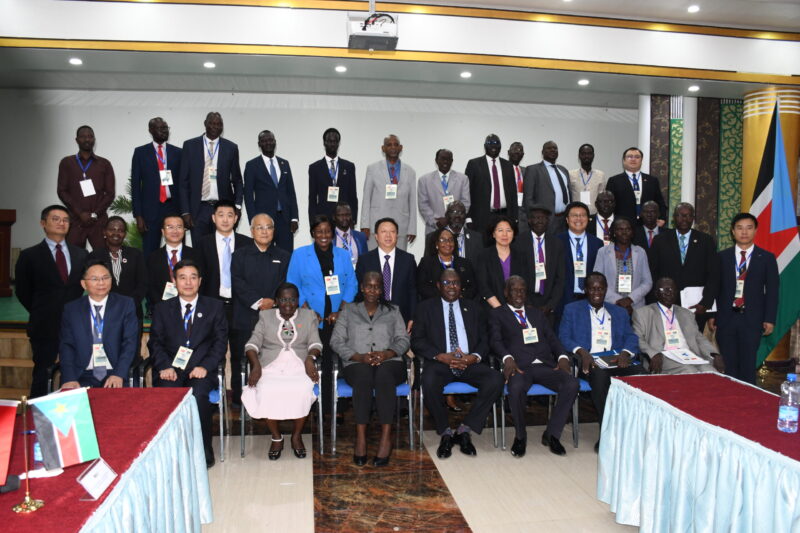
On August 25, 2025, the University of Juba, in collaboration with the Embassy of the People’s Republic of China, hosted the China–South Sudan High-Level Peace and Development Symposium at Beijing Hotel in Juba, South Sudan. Held under the theme “A Joint Symposium for Building a Community with a Shared Future for Humanity,” the event aimed to foster meaningful dialogue, exchange perspectives, and deepen mutual understanding between China and South Sudan on key issues including peace and development, upholding the international order, fairness and justice, poverty reduction, and human rights guarantees cooperation. The symposium brought together senior government officials, diplomats, academics, and policy experts from both countries to engage in thoughtful discussions on bilateral and global development priorities.
In his opening remarks, Professor Robert Mayom Deng, Vice Chancellor of the University of Juba, welcomed Chinese scholars, embassy representatives, government officials, and South Sudanese academics and think tanks. He described the symposium as a historic occasion jointly organized by the University of Juba and the Embassy of the People’s Republic of China in the Republic of South Sudan. Professor Deng emphasized the importance of mutual understanding and cooperation in areas such as peace, justice, economic growth, and human rights. He noted that China’s foreign policy emphasizes collective development, especially in Africa, and highlighted infrastructure, agriculture, humanitarian support, and capacity building as areas of active cooperation. He also acknowledged the Embassy of the People’s Republic of China support for the University of Juba, including the construction of e-learning classroom, donation of computers, training of academic staff, and sponsorship of cultural events. Professor Deng praised the Chinese Ambassador’s contributions in offering scholarships and financial support to students, emphasizing that empowering individuals through education is the key to long-term self-reliance.
H.E. Mrs. Huo Ying, Chargé d’Affaires of the Embassy of the People’s Republic of China in the Republic of South Sudan, welcomed the delegations and highlighted China’s commitment to peaceful development. She cited President Xi Jinping’s vision of peace and global cooperation, underscoring China’s historical avoidance of colonialism and conflict. Mrs. Huo stated that China promotes respect for cultural diversity and encourages countries like South Sudan to develop based on their unique national circumstances. She emphasized China’s support for fairness in international relations, increased trade with Africa, and development assistance in South Sudan. She expressed hope that the symposium would further strengthen academic and diplomatic ties between the two nations.
Hon. Dr. Martin Elia Lomuro, Minister of Cabinet Affairs, addressed the vital connection between peace and development, stressing that peace is a necessity, not a luxury for South Sudan’s nation-building efforts. He reaffirmed the importance of the Revitalized Agreement on the Resolution of the Conflict in South Sudan (R-ARCSS) as a framework for achieving peace and stability, and emphasized that peace must result in tangible improvements in infrastructure, healthcare, education, and job creation. Hon. Dr. Lomuro called for transparent and effective use of national resources, aligning development initiatives with the economic provisions of the peace agreement. He acknowledged China’s development support through the Belt and Road Initiative and emphasized the critical role of universities like the University of Juba in building human capital. As South Sudan prepares for upcoming elections and the drafting of a permanent constitution, Hon. Dr. Lomuro urged all sectors of society; including youth, women, and religious leaders to work together to transform peace from theory into lasting development for all citizens.
Hon. Atong Kuol Manyang highlighted the long-standing cooperation between South Sudan and China in areas such as petroleum, infrastructure, and education. She noted the potential for further collaboration through capacity-building for local entrepreneurs, technology transfer, and improved financial access for small and medium enterprises. Hon. Atong pointed to China’s rapid economic growth and successful poverty reduction as a model South Sudan could learn from, expressing optimism that Chinese investments and technical expertise would play a significant role in supporting South Sudan’s development and poverty alleviation goals.
The symposium featured three thematic sessions. The first session focused on upholding the international order, fairness, and justice. Scholars from both countries shared perspectives on international law, the modernization of global governance, and challenges to equitable international relations. The second session addressed peace and development, with scholars discussing the role of education in promoting peace and development, equitable resource planning, and economic stability. The third session centered on poverty reduction, and human rights guarantees cooperation, where scholars explored issues such as agricultural development, food security, legal reforms, and the mismanagement of national resources.
The China–South Sudan High-Level Peace and Development Symposium marked a significant step in strengthening bilateral relations. Through open dialogue and shared perspectives, the event reaffirmed both nations’ commitment to working together to build a peaceful, prosperous future based on mutual respect, sustainable development, and collective progress.
by Ms Ann P. James